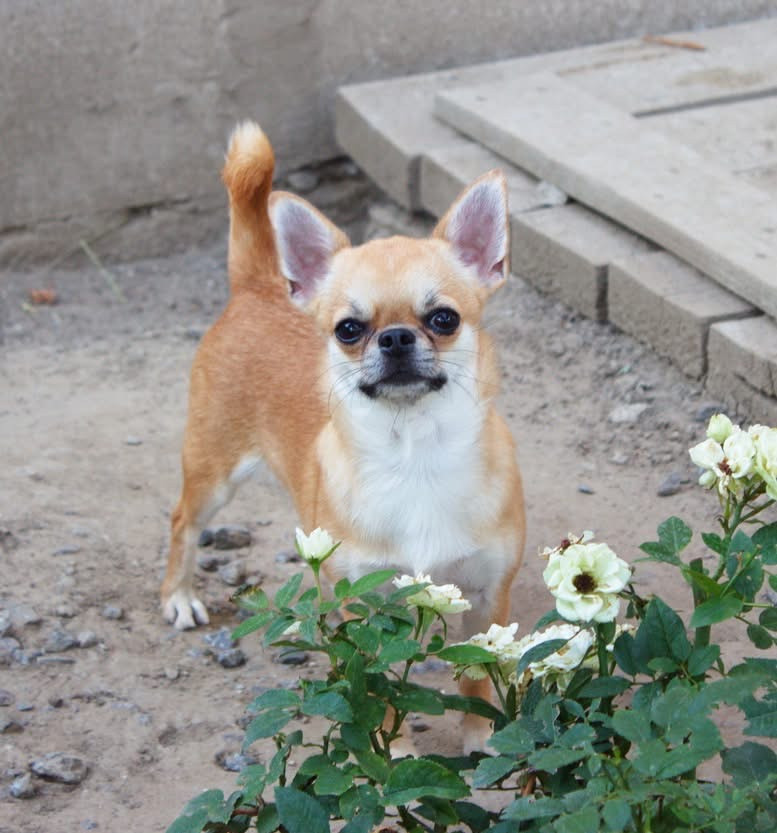
Origin of the Breed
The roots of the breed trace back to the prehistoric civilizations of Аmerica. It is believed that the ancestors of modern Chihuahuas were small, short-haired dogs known as Techichi, kept by the Toltecs.
The Toltecs believed their dogs possessed spiritual power: they could guide the souls of the deceased through the afterlife, serving as protectors and companions. Archaeologists have discovered depictions of Techichi in ancient burials and temples. Later, when the Toltecs were conquered by the Aztecs, the reverence for these small dogs only intensified. They were honored, used in sacred rituals, and regarded as mystical beings.
Following the Spanish conquest in the 16th century, the cultures of the Toltecs and Aztecs declined, but the small dogs survived in rural areas. In the 19th century, travelers visiting North America encountered these tiny dogs in the Mexican state of Chihuahua — which is how the breed got its modern name.
From around the 1880s, Chihuahuas began gaining popularity in the United States. They were something entirely new and exotic: incredibly small, intelligent, and expressive. In 1904, the American Kennel Club (AKC) officially recognized the breed, and it quickly became fashionable among celebrities and aristocrats. Today, the Chihuahua is one of the most well-known toy breeds in the world.
Breed and Physical Characteristics
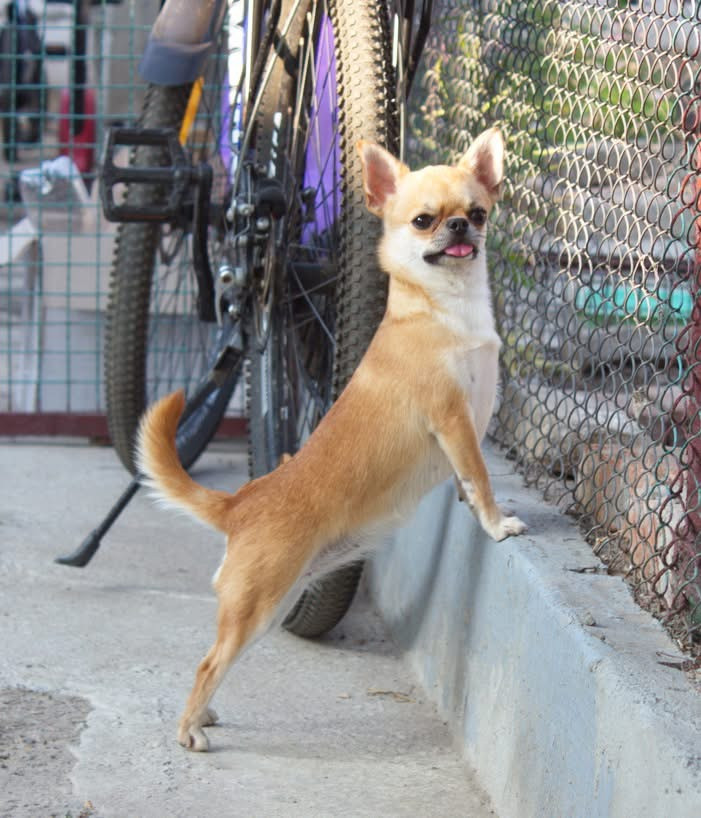
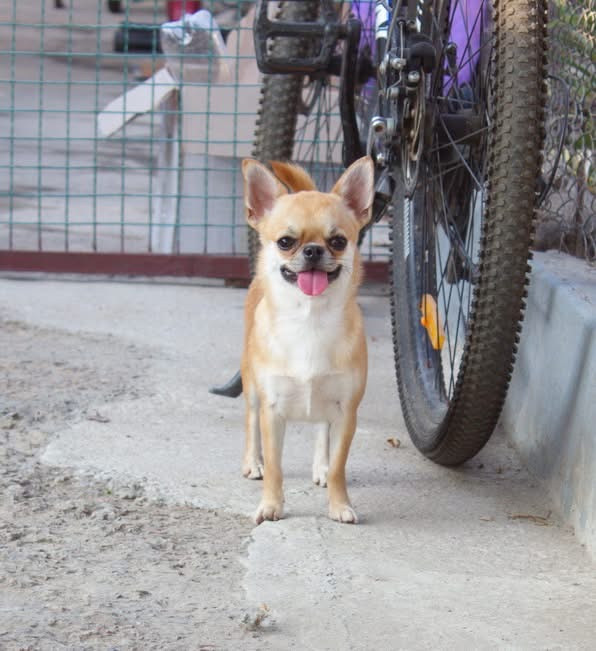
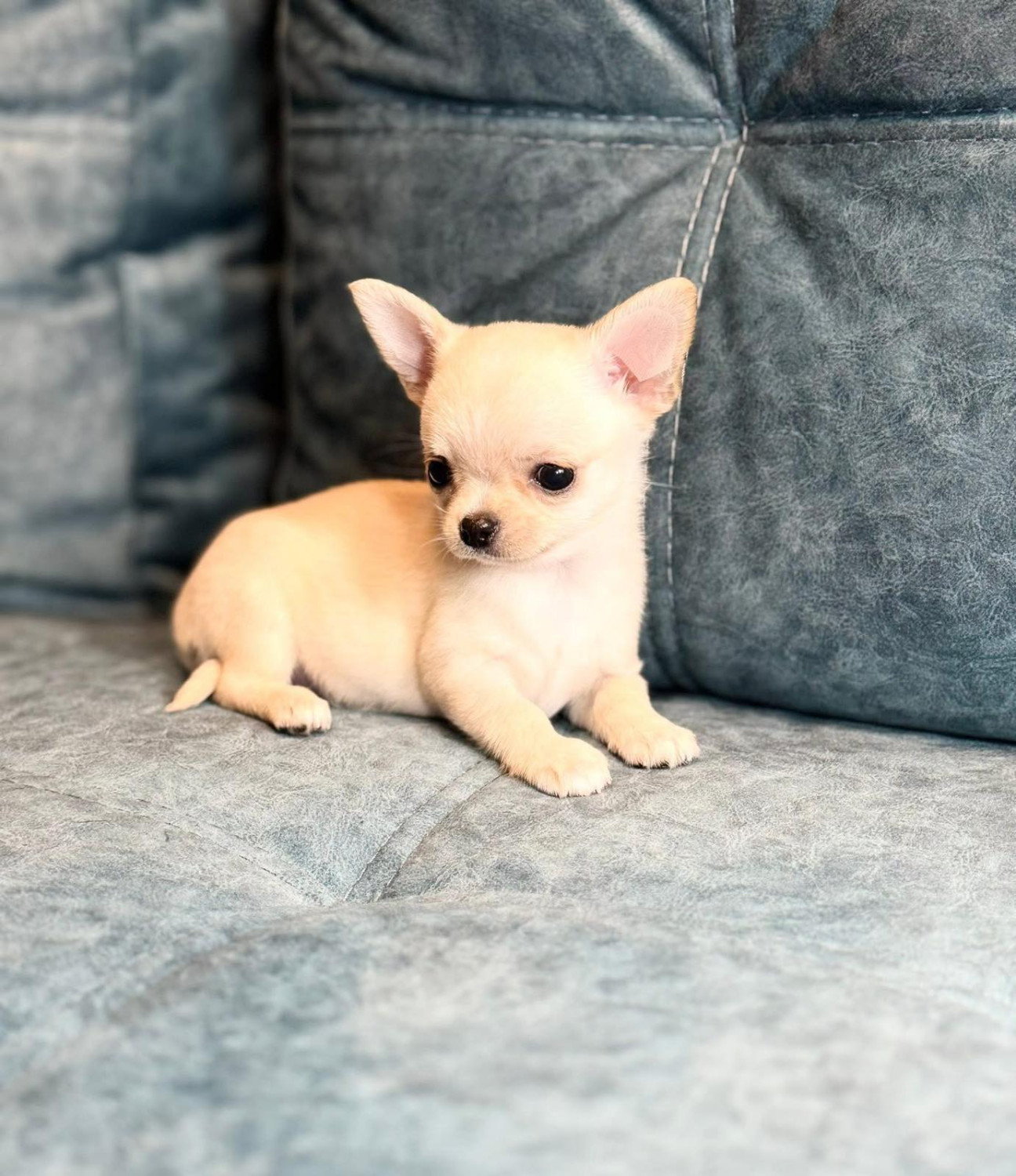
The Chihuahua is a compact, well-balanced dog with a distinctive apple-shaped head. The ideal weight ranges from 1.5 to 2.5 kg, with a minimum of around 1 kg (according to some national standards) and a maximum of up to 3 kg.
There are no strict height requirements; proportions are more important. The head is relatively large compared to the body and has a rounded, apple-like shape. The forehead is prominent, with a clearly defined stop. The muzzle is short and slightly pointed.
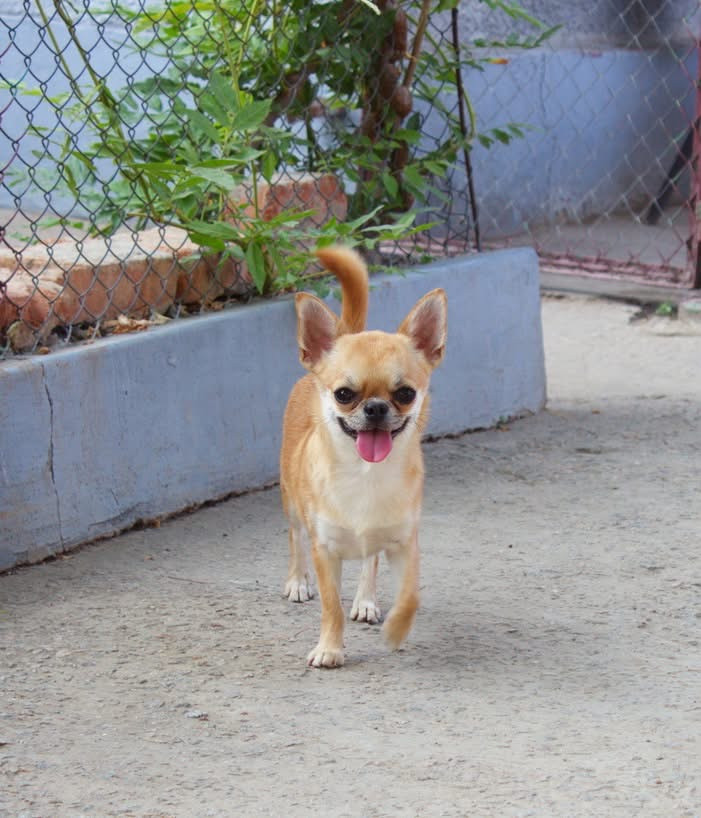
The eyes are large, round, and expressive—typically dark, though lighter shades may occur in lighter-colored dogs. The ears are large, erect, wide at the base, and set at approximately a 45° angle.
The body is compact, with a straight back and a broad, well-developed chest. The tail is of medium length and set high. At rest, it hangs down; in motion, it is carried in a semicircle or sickle shape over the back.
There are two coat varieties:
- Smooth coat (short coat) — short, dense, glossy hair that lies close to the body;
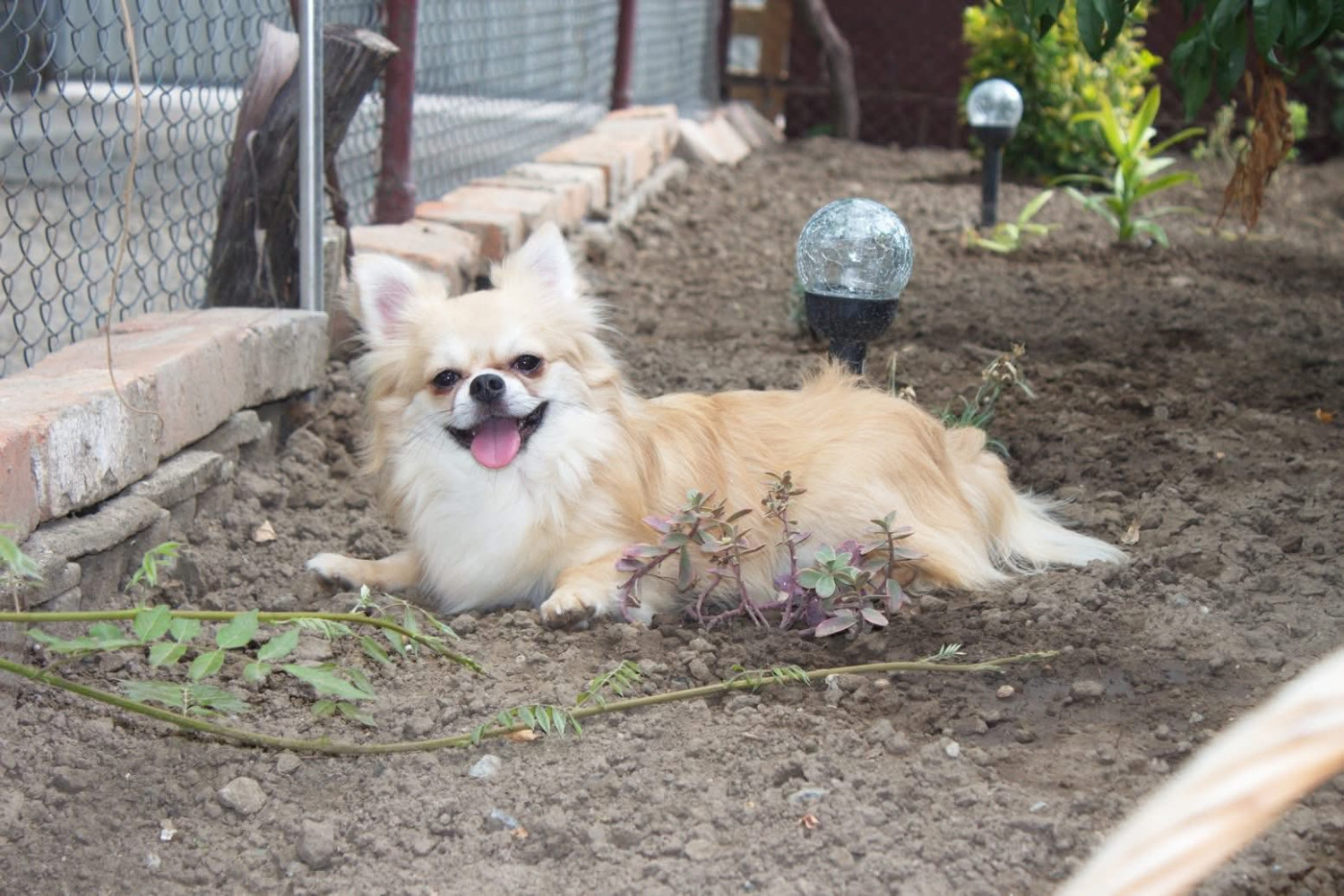
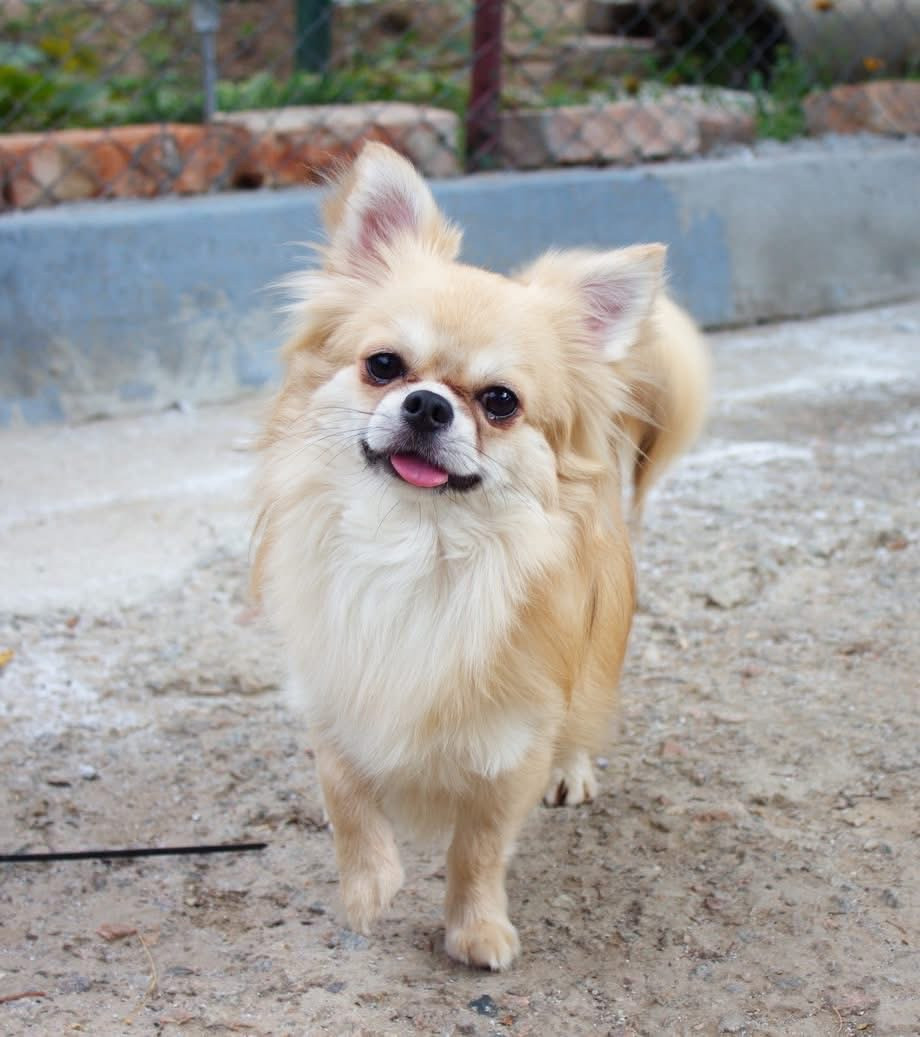
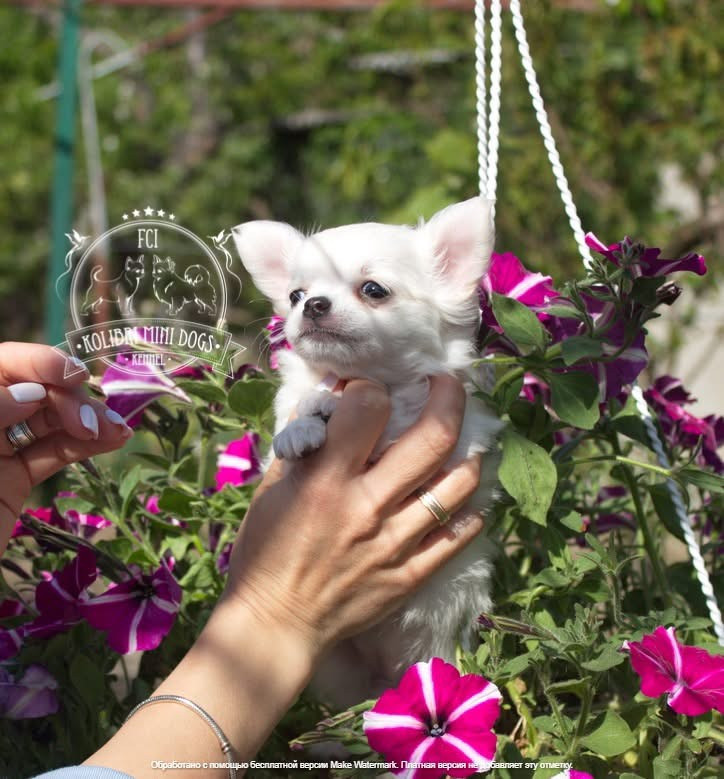
- Long coat — soft, silky hair that may be straight or slightly wavy, with a pronounced ruff around the neck and feathering on the ears, legs, and tail.
The coat comes in a wide variety of colors: solid, spotted, or multicolored (black, white, fawn, chocolate, cream, blue, silver, brindle, and others).